Why Kids Don’t Play Outside Anymore…
…and what you can actually do about it.
Parents Are Losing The Screen Time Battle
– The tech designed to help parents is being outsmarted by seventh graders.
You’ve set the limits. Downloaded the apps. Created the charts. Changed the passcode, again. Yet somehow, your child is still glued to their device at 11 PM on a school night.
If you’re a parent right now, you already know this feeling. The exhaustion. The guilt. The sneaking suspicion that you’re fighting a battle you were never equipped to win.
Here’s what nobody tells you: You’re not failing. The system is.
The Numbers Don’t Lie
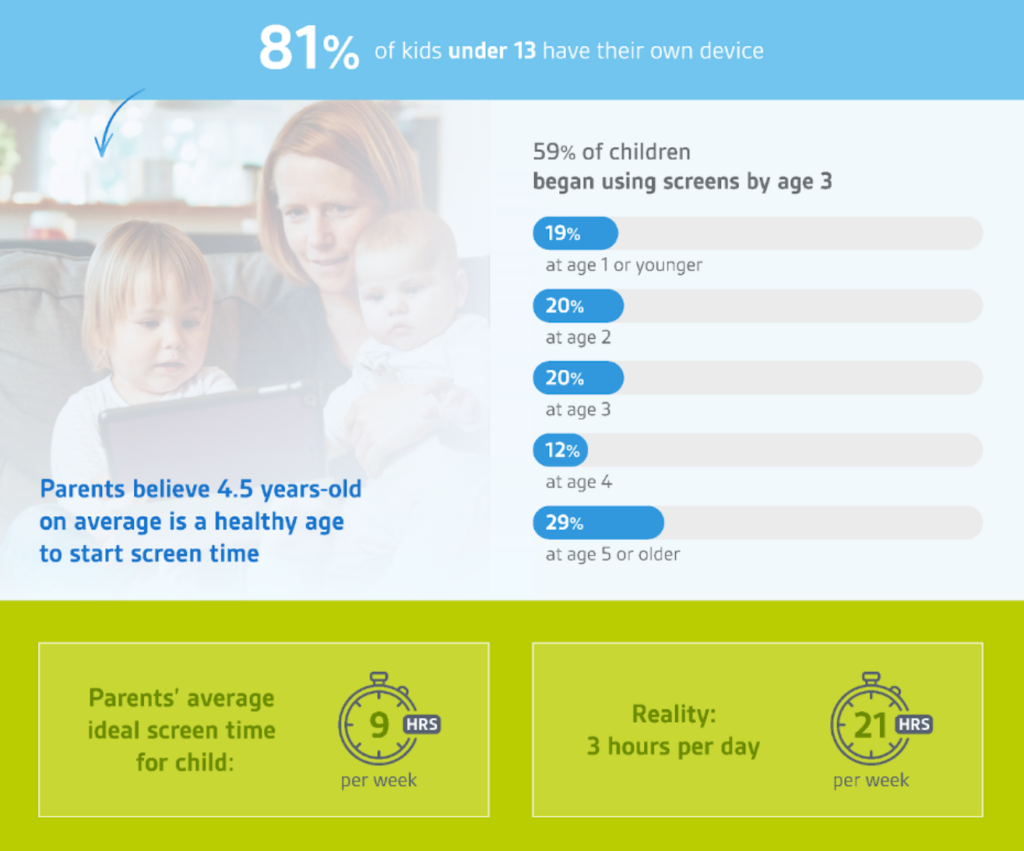
Let’s start with the facts. According to a 2025 survey by Lurie Children’s Hospital, American kids are averaging 21 hours per week on screens, more than double the 9 hours parents say would be ideal.
For teens, it’s even more alarming. Research shows the typical American teenager now spends 7 hours and 22 minutes daily looking at screens. Boys average 9 hours and 16 minutes. Girls clock in at 8 hours and 2 minutes.
That’s nearly half their waking hours.
And before you think this is just a ‘kids these days’ problem, consider this: Pew Research found that 65% of parents admit they spend too much time on their own smartphones. We’re all trapped in this.
What You’ve Already Tried (And Why It Hasn’t Worked)
If you’re like most parents, you’ve already been down this road. You tried Apple’s Screen Time controls. Set app limits. Blocked access during downtime. Created the ‘perfect’ system. Then your kids figured out the workarounds.
Parents across the country are discovering their children have become digital escape artists:
- Changing the phone’s time zone to bypass downtime restrictions
- Restarting their devices to get ‘one more minute’ over and over
- Adding apps to the ‘Always Allowed’ list (which isn’t password protected!)
- Using VPNs to stop restrictions entirely
- Even changing their phone names to emojis to confuse iCloud syncing
One frustrated parent shared in an Apple Community forum: “Every few days, all the app limits I put in place…disappear.” Another wrote: “My daughter has an option that says ignore limit, then after pressing that, she can ignore limit for today.”
The technology designed to help you is being outsmarted by seventh graders.
The System That Wasn’t Built For You
Here’s the uncomfortable truth: Screen Time wasn’t designed to protect your kids. It was designed to look like it protects your kids. As one parental control expert explains, Apple walks a tightrope offering just enough parental control to tick a box…while keeping the system simple enough to sidestep conflict, and ineffective enough that everyone still gets plenty of screen time.
Why? Because tech companies profit from screen time. Every minute your child spends on their device is revenue. App downloads. In-app purchases. Ad impressions.
Your child’s attention is the product being sold.
And when parents try the old-school approach—charts, logs, strict time limits—it often backfires. One homeschool mom of five described her experience: “It was super stressful. The constant monitoring and micromanaging were tedious…these attempts to limit screen time just were not effective.”
Another parent in a Pew Research focus group noted: “I just feel like, when you restrict a kid from something, they want it more.”
What’s Really Happening To Our Kids
Beyond the failed controls and the nightly battles, there’s something deeper going on.
Kids are disappearing from the real world. Research shows that American children today spend 35% less time playing outside freely than their parents did.
When asked directly, 89% of kids say they prefer playing with friends over playing online. Playing outside is their favorite activity of all.
But they’re not doing it.
One fourth grader, Patrick, captured the heartbreak perfectly: “You get to be friends in virtual reality. The sad part is, when you take your headset off, you never get to see them.” His friend Karin added, “In real life you get to see them every day in school. You have actual friends.”
Actual friends. That’s what’s being lost.
The Hidden Danger You Don’t See Until Later
The research on what kids are missing is sobering:
- Social development: Children who spend most of their time socializing through devices miss out on learning non-verbal communication skills like eye contact, facial expressions, body language, and physical distance between speakers. These are skills that can’t be learned through a screen.
- Emotional regulation: Kids who lack outdoor play time struggle more with anxiety, stress, and difficulty building relationships. Studies show that screen time is linked to increased anxiety, depression, and stress in American college students, while time in nature reduces these mental health issues.
- Physical health: The obvious one, but worth stating. Sedentary screen time is replacing the active play that builds healthy bodies.
- Risk-taking and decision-making: Research indicates that children who grow up without taking physical and social risks like climbing trees or initiating new friendships, can struggle to make decisions in adulthood.
The Guilt Cycle Keeping You Stuck
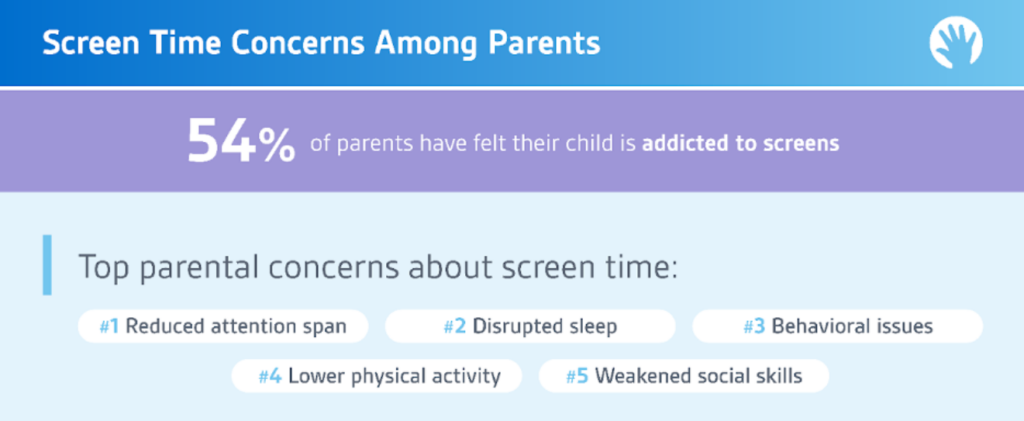
And through all of this, you’re probably blaming yourself. Pew Research found that 42% of parents think they could be doing a better job managing their child’s screen time. That number rises to 47% for parents with kids ages 8-12.
You see other families at the park. You read articles about ‘good parenting’ and screen-free households. You feel the judgment, sometimes from other parents, often from yourself. One parent in a focus group admitted: “There’s definitely pressure and judgment from other parents, which I know usually just comes from a place of insecurity about our own stuff.”
But here’s what the data actually shows: One of the strongest predictors of a child’s screen time is their parents’ screen time.
This isn’t a willpower problem. This is an environmental problem.
What Actually Works, According to Science
The experts have shifted their approach. The American Academy of Pediatrics has abandoned their strict two-hour daily limit. They now emphasize that it’s more useful to focus on how screens are being used rather than counting minutes.
A 2025 report from the AAP warns that “enforcing time limits alone fails to address the influence of powerful platform designs built to drive engagement.”
Dr. Tiffany Munzer, a pediatric behavioral specialist at the University of Michigan Hospital, told ABC News: “Over the last decade, the science of media has evolved, and simply taking devices away or enforcing rigid rules can backfire for parents.”
So what does work? The research points to something simple but profound: Change the environment, not just the rules.
Studies show that adolescents with more nature exposure were significantly less likely to exhibit internet addiction. Awe-inspiring experiences in nature were especially impactful in preventing or reducing screen dependency. One pediatrician put it this way: “When kids have safe places to play, learn, and connect offline, screens stop filling that gap.” And there’s this critical finding: Kids are 500% more likely to be active when their parents are active themselves.
The Solution You Haven’t Considered
What if the answer isn’t better parental controls? 86% of parents told Pew Research that they have rules around screens, but just 19% state they actually stick to those rules.
What if it’s not stricter rules or more willpower or another app promising to fix everything?
What if the answer is simply this: A place where kids want to be outside more than they want to be online.
- Not because you’re forcing them.
- Not because you’ve blocked their favorite apps.
- But because there’s something better for them, just outside their front door.
Neighbors they actually know. Trails to explore. Sports to play. Skateboard tricks to show off. Friends who show up in real life, not through a screen.
That’s Firefly! A community designed around the idea that childhood happens outside.
Because here’s what the research makes crystal clear: You can’t solve an environmental problem with individual willpower alone.
The tech companies have built a system designed to capture your child’s attention. They’ve invested billions into making it irresistible. They’ve programmed the devices to trigger fear and reward dopamine hits.
And they’re counting on you to fight this battle alone, armed with nothing but parental controls that your kids will bypass by next Tuesday.
There’s Another Way
What if instead of fighting screens, you gave your kids something they didn’t want to miss?
What if the question changed from “How do I limit screen time?” to “How do I get my kid to come inside for dinner?”
What if 75% of your time with your kids is gone by age 12, but you decided to maximize what’s left?
Because when your kids grow up, they’re not going to remember the time limits you set on their devices. They’re going to remember the stories.
- The adventures
- The friendships
- The scraped knees, learning to skateboard, and that one incredible bike jump
Your kids are going to remember their childhood. The question is: What kind of childhood are you giving them the chance to have?
Sources: